

Milo McKinnon on composing for the runway
Mix the soundtrack for twelve runway looks.
Milo McKinnon is a London-born composer and music producer whose work spans fashion, film, dance, theatre and live performance. He has composed bespoke music for projects with Aston Martin, Dior, Jo Malone, Calvin Klein, Emilia Wickstead, Milan Design Week, Dezeen and The Four Seasons Hotel.
Milo McKinnon in conversation with Listen Closer
Could you start by telling us a little about yourself and your work?
My name is Milo McKinnon. I’m a Londoner, born and bred. I started playing piano when I was about four years old, followed later by trumpet and drums. I studied jazz piano at Trinity Laban Conservatoire of Music and Dance and, since graduating in 2018, have fallen in love with composition. I now work as a composer and music producer, and over the last few years I’ve been fortunate to compose bespoke music for brands such as Aston Martin, Dior, Jo Malone, Calvin Klein, Emilia Wickstead, Milan Design Week, Dezeen and The Four Seasons Hotel. I’ve also collaborated with dancers, choreographers, artists, designers, filmmakers and theatre producers on a variety of projects for film and live performance. I recently composed my first opera.
I stay inspired by working with inspiring people across all disciplines of art, dance, theatre, fashion, film and music. I like to tell stories with my work, blending sounds, organic textures, voices and instruments to add new meanings and depth to collaborative projects.
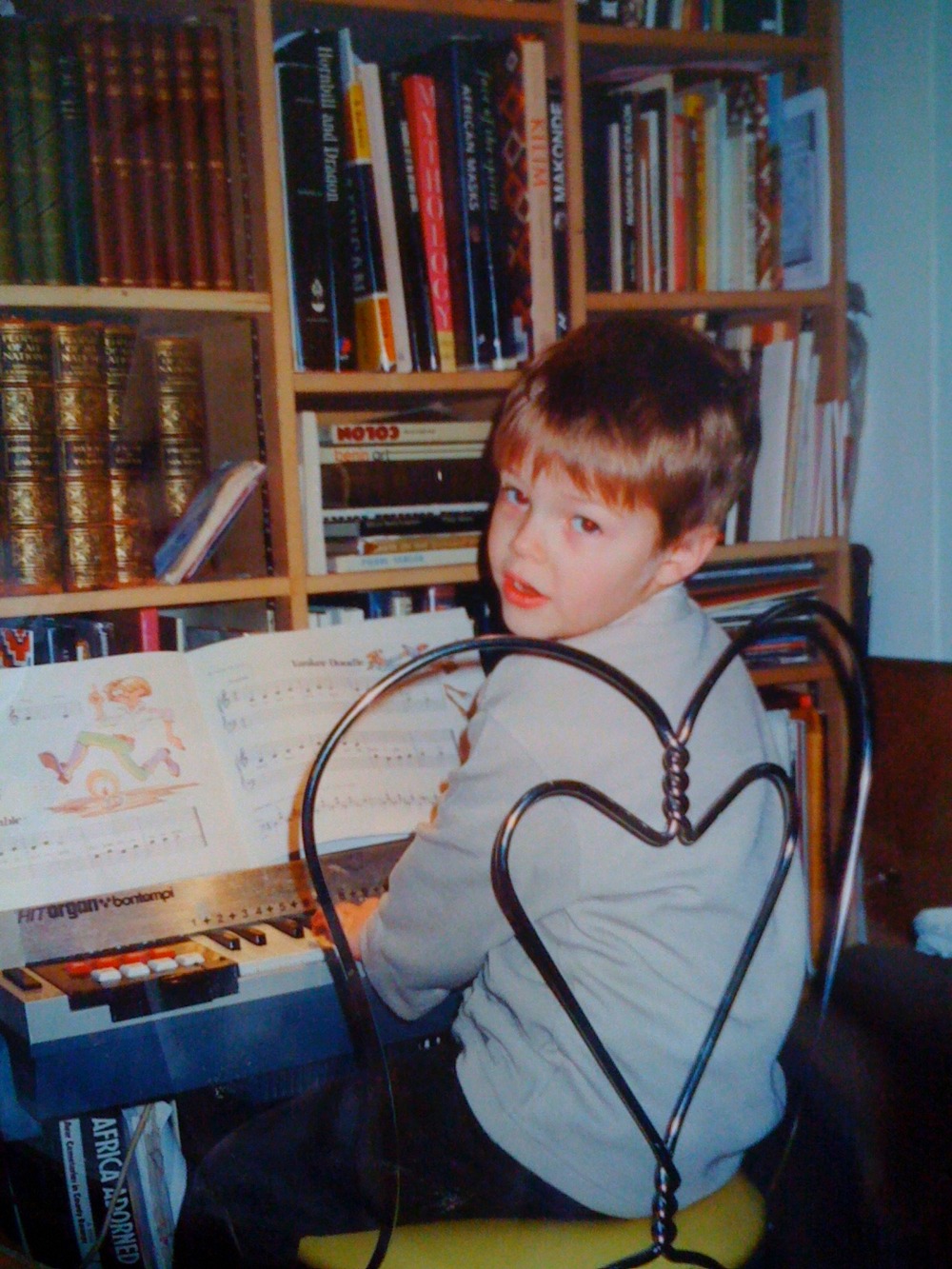
You began playing piano at four, followed by trumpet and drums. How did that early relationship with instruments lead you into composition and the cross-disciplinary work you do now?
Now as I look back, I realise that learning these different instruments from a young age; subconsciously was helping me gain an awareness of the power each individual instrument could play in a piece of music. I was blessed to get to play in so many different kinds of ensemble growing up; Orchestras, Jazz ensembles, Big Bands, Marching band, Choirs Percussion ensembles; as well as being taught by so many dedicated and inspiring teachers.
For as long as I can remember I've always been making little tunes and writing songs, but it was when I was at music college that I really began to discover my voice think, getting comfortable with exploring sounds and music that inspired me, and working out how to create it for myself. A journey of self discovery... how to combine genres and styles and instruments and make something that feels unique and hopefully, unequivocally me.
It is a process that I will continue to enjoy exploring and developing for the rest of my life!
I've grown up in a very artistic and creative family, surrounded by inspiring people, and I was always encouraged to have a very can-do mindset. My mum and dad introduced me to theatre, art, ballet and opera, from a young age, and always emboldened me to question what I liked or didn't like in something, to try and better understand what I was seeing and feeling. The older I got.. I began to realise all these art forms are all interconnected in a lot of ways, at least that's how I see it. They are all just forms of expression, and story telling. And the more fell in love with music, the more began to discover the importance of music in all of these spaces and worlds. And that was the lightbulb moment; realising the endless opportunities there are to make and create, with so many inspiring and talented people; writers. dancers, artists, filmmakers, choreographers, designers, musicians; the possibilities are endless!
How did fashion first enter your practice, and what made you want to pursue runway projects further?
I've always been interested in fashion, and clothes. Identity and style is a very cool and very special thing. I was only 24 when I made a piece for Robert Woods at the ICA in 2019, and my friend was working on the project as the stylist, and he persuaded the designer to get me involved. I had never done anything like this and I was essentially learning on the job. I made a 25 minute piece, and in the process got to experiment with sound and music like I hadn't done before - Chopping up voices from interviews, blending nature sounds, footsteps, clocks, ethereal voices and instruments until I had made my first installation soundscape. I found my freedom in the experimentation and it was liberating. This was my introduction into making something in the world of fashion, and seeing first-hand how powerful music and sound could be in elevating a show. It was a big moment for me.
Since then I've been blessed to write music for a few runway shows and fashion installations. It is incredibly fun and inspiring.
What does a runway project usually begin with? What does a designer share with you before you start?
The conversation usually begins with a brief. This tends to consist of the inspiration behind the collection and the show, the story they’re aiming to tell, some rough sketches of the space, some words about the clothes and potentially some other visual or musical references.
Once you have the brief, how do you begin to understand the collection and its inspiration?
Before I start making any music, I spend time researching the inspiration behind the collection. I watch documentaries, read articles, look at images and listen to interviews. I begin to build a picture in my mind so I can better understand the person or topic inspiring the clothes.
I’m aiming to create a sound world for these clothes to come alive in, and I want to create something that complements or juxtaposes with their personality. Are the pieces elegant or bold? Colourful or monotone? Textured or smooth?
It’s similar to writing music for film in a way. The tone of the music can instantly alter how you see something. Sometimes the music and sound could be a more literal accompaniment to what you’re seeing, or you can pair it with something completely unrelated and obscure. It’s all about being open to experimenting and being bold enough to try things. Sometimes it works... sometimes it doesn’t!
How do visual and material details from the collection begin to find their way into the music?
I’ve approached it in many different ways in the past. I can often be especially inspired by the textures of fabric, so I’ve built pieces around sounds from the production process of clothing, for example, the ‘clack’ of sewing machines, scissors cutting fabric, paper being ripped and pencils scribbling.
For one collection, I made a piece inspired by a famous photographer and his photographs, so I used the sounds of camera shutters and film-camera reels as the basis for the rhythm of the music. Sometimes I use these things subtly, just to add movement and colour; other times, they become more of the foundation, prominent and bold in the mix. I find these kinds of tactile textures a really beautiful addition to the music.
Once you start making music, what tends to come first: a rhythm, a melody, an instrument or simply a feeling?
A lot of it is instinctive. Like most of the music I make, there will be something I have seen that resonates with me, and then I will explore that feeling with a variety of instruments or sounds. It could be my voice singing notes and layering them into a chord, chords on the piano, a melody on the trumpet or something rhythmic with strings. It could even be a rhythm made with the sound of my hands rubbing together.
Sometimes, if I’m feeling stuck, I’ll sit at an instrument and think, “How would I play this if I’d never played this thing before?” I’ll try plucking the piano strings, breathing sounds through the trumpet or scratching a drum skin with a brush. Then I’ll experiment, recording these sounds and combining them with other elements until I land on something that feels special and interesting.
As you compose, do you imagine how the clothes and models will move through the space?
In some cases, I will, yes. Or I may watch videos of old collections by the designer with the sound on mute and write along to them for a moment, so I can get a feel for how the models may walk and how the clothes may move. It can be a helpful way to visualise how the music will work in conjunction with the clothes, runway and space.
How do the pace of the models and the movement of the show shape the structure of the soundtrack?
Something for the runway will usually need an underlying pulse for the models to walk to. Having worked with dancers and choreographers on projects in the past, a similar mindset can be applied to creating music for the runway: the pulse, the groove, the movement of the sound.
And then there are the highs and lows of the piece, the arc of the dynamics and how to keep it exciting without becoming too repetitive. The arrangement is key in most music, and the dynamic evolution of the piece is very important to consider. There may be a moment in the middle, for example, where some elements or instruments cut out and the mood becomes more spacious and dreamlike. They may then slowly re-enter and build towards a grand finale.
Again... it’s storytelling. You need a beginning, a middle and an end.
How does the space itself, along with sounds such as footsteps and fabric, affect what you create?
It’s totally project-dependent, of course, but it definitely plays a part in dictating some of the decisions I make. I made a piece for a fashion installation for the designer Roberts Wood at the ICA a few years ago. The show was inspired by women in creative fields, such as potters, painters and designers, and how the clothes they wear affect the way they feel and create.
I used snippets of their voices from interviews with creative female friends of the designer and combined that with a dreamlike soundscape of sounds and music. I had to consider how the music would move around such a large space and how different rooms would feel in relation to one another.
For runway shows, I feel the sounds of footsteps and fabric are almost like an additional live-music element. As I mentioned earlier, they kind of become another tactile texture within the music. It’s like theatre.
When do you begin sharing ideas with the designer, and how does their feedback shape the piece?
I will often send snippets of ideas quite early on in the process, so I can get feedback quickly and see if they like the direction the music is heading in.
I’m a diligent worker, and after years of writing music for people, I have learned not to take things personally if they don’t like something. This is a very important lesson to learn! You’ve just gotta stick with it and keep trying ideas until you land on the right one. Sometimes they may love the very first thing you send them; other times, it may take quite a few attempts. Often, it is just a case of them knowing what they want when they hear it. Patience and persistence are key.
How do you make sure the music supports the clothes without overpowering them?
I’d say it comes down to remaining undogmatic and being sensitive, flexible and open-minded about the ideas I explore. For me personally, that initial stage of research is a hugely important part of the process, as it allows me to immerse myself in a new world of ideas and inspiration specifically tailored to the show.
It becomes fundamental to the choices I make. I feel like I can then trust my decisions more if I am creating from this place of connection with the origins of the inspirations behind the project.
What can original music give a runway show that an existing song cannot?
Identity and individuality. Inimitability.
Obviously, an existing song can work fabulously, and in some instances, an existing song reimagined in a contemporary way, for example, is a cool way of reinventing something old. But when you use an existing song, there is instantly an aspect of familiarity that needs to be taken into consideration.
People will be watching, and if they know the song, it will instantly affect their emotions towards what they are seeing, based on whatever connection they may or may not have with the music.
Something bespoke and original, however, that has been tailored to the show leaves more room for the viewer to create their own feelings and paint their own picture of what the show or collection is trying to convey. There is no right or wrong, and that’s the beautiful thing about it. It’s all subjective, and it always will be. That’s art.
Selected work
View on Instagram ↗
View on Instagram ↗
View on Instagram ↗