
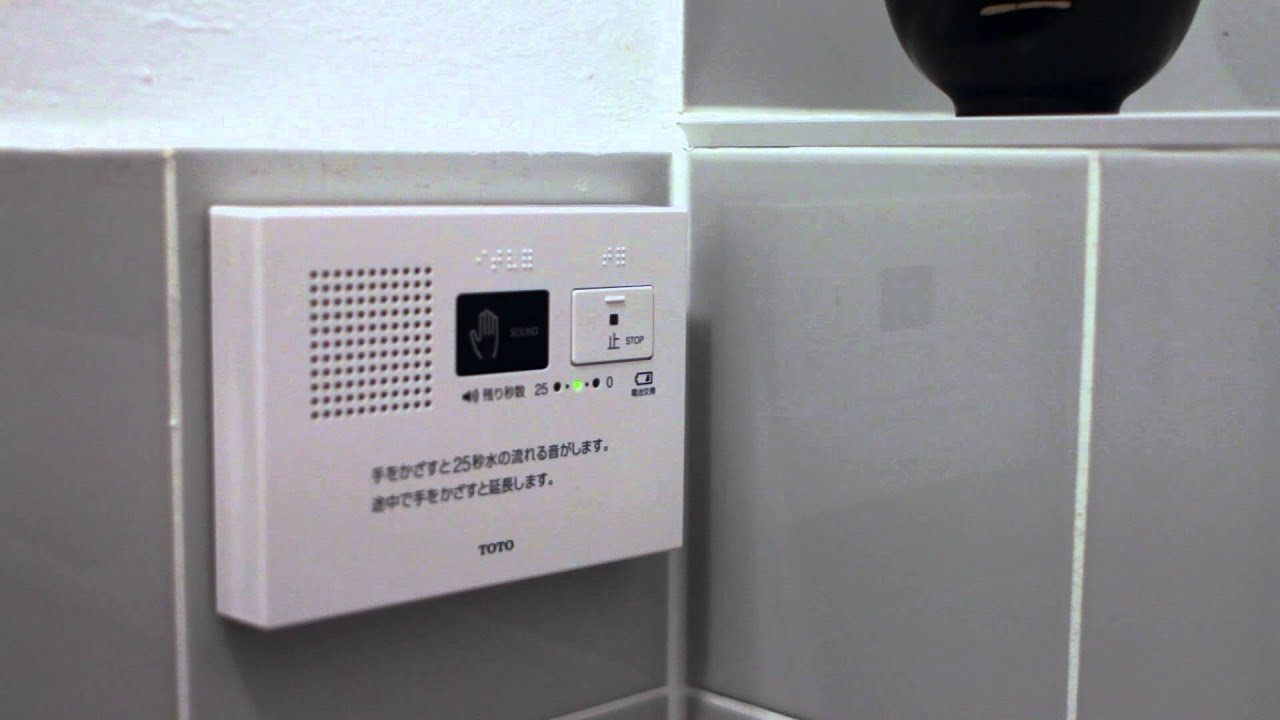
The Japanese Sound Princess
A little sound. A lot less flushing.
I pressed a button on a toilet in Japan, and the cubicle filled with the sound of running water.
The button had a small speaker symbol and was placed beside the controls for water pressure, spray position and seat temperature. In many Japanese public toilets, Otohime is a small wall-mounted unit fixed inside the cubicle, separate from the toilet itself. On newer Washlets, the sound button is built into the same control panel as the bidet and flush settings. It is really easy to mistake for another piece of bathroom technology.
It was only much later that I found out that button was actually designed to replace an extra flush.
At Rendaiji, a temple in Kurashiki patronised by the Okayama lords, a surviving bronze urn dates back to 1799. Roughly 40 centimetres wide, it was filled with water and fitted with a tap near its base. The urn stood beside a toilet reserved for a feudal lord. When the lord stepped inside, an attendant would open the tap and let the water run. The sound was deliberate. Its purpose was to cover whatever could be heard from inside the toilet, sparing the lord the embarrassment of having his bodily sounds carry to anyone waiting outside.
Nearly two centuries later, Japan returned to the same problem for a very different reason: water shortages.
In 1978, a severe drought forced Fukuoka to restrict its water supply. Tokyo faced restrictions the following year. At the time, repeated flushing was becoming difficult to ignore. In 1979, Orihara Manufacturing, a Tokyo water-fixtures company, released Echiketone, which it describes as Japan’s first electronic toilet sound device.
TOTO followed in 1988 with Otohime. Designed for public toilets and office buildings and marketed mainly to women, the wall-mounted device gave each stall its own small speaker. Pressing a button played around 25 seconds of running water, enough to mask the sounds from inside the cubicle without wasting another flush.
The saving was considerable. Toilets at the time could use around 13 litres of water with every flush, and TOTO found that some women were flushing two or three times during a single visit simply to cover the sound. The company estimated that Otohime could save roughly 20 litres of water each time the toilet was used. In an office with 400 women, that could amount to more than 10 million litres of water a year.
A woman on the original development team chose the name. Oto means sound and hime means princess, a reference to Otohime, the princess who lives in an underwater palace in the Japanese folktale Urashima Tarō.
The team also had to decide what the device would actually sound like. Rain was considered, but they settled on the sound of a toilet flushing. It was familiar, loud enough to mask other noises and ordinary enough to blend into the bathroom around it.
As toilets became quieter, however, the recording began to sound increasingly mechanical. For a 2011 redesign, a developer took a microphone into the mountains of Kyushu and recorded a stream. Later versions also offered birdsong.
The sound was then adjusted and tested with women inside and outside the company. Volume, duration and frequency all had to be taken into consideration. If it was too quiet, it did not mask enough. If it was too loud, it could make the person using it feel more noticeable.
The device also had to cover more than the sound of using the toilet itself. TOTO staff have described requests to mask the tearing of sanitary-pad wrappers, the rustle of clothes while changing tights and other small noises that could be easily heard from outside a cubicle.
By 2014, TOTO’s surveys were also showing demand for sound-masking devices in men’s toilets. The company began leaving the Otohime name off some units, explaining that the word “princess” could make men assume the product was intended only for women.
In a way, Otohime brought the idea at Rendaiji back in a new form. The sound of running water was still being used to create a sense of privacy. The only difference was that now, no water had to run at all.