Isla Paine on Sound, Metal and Movement
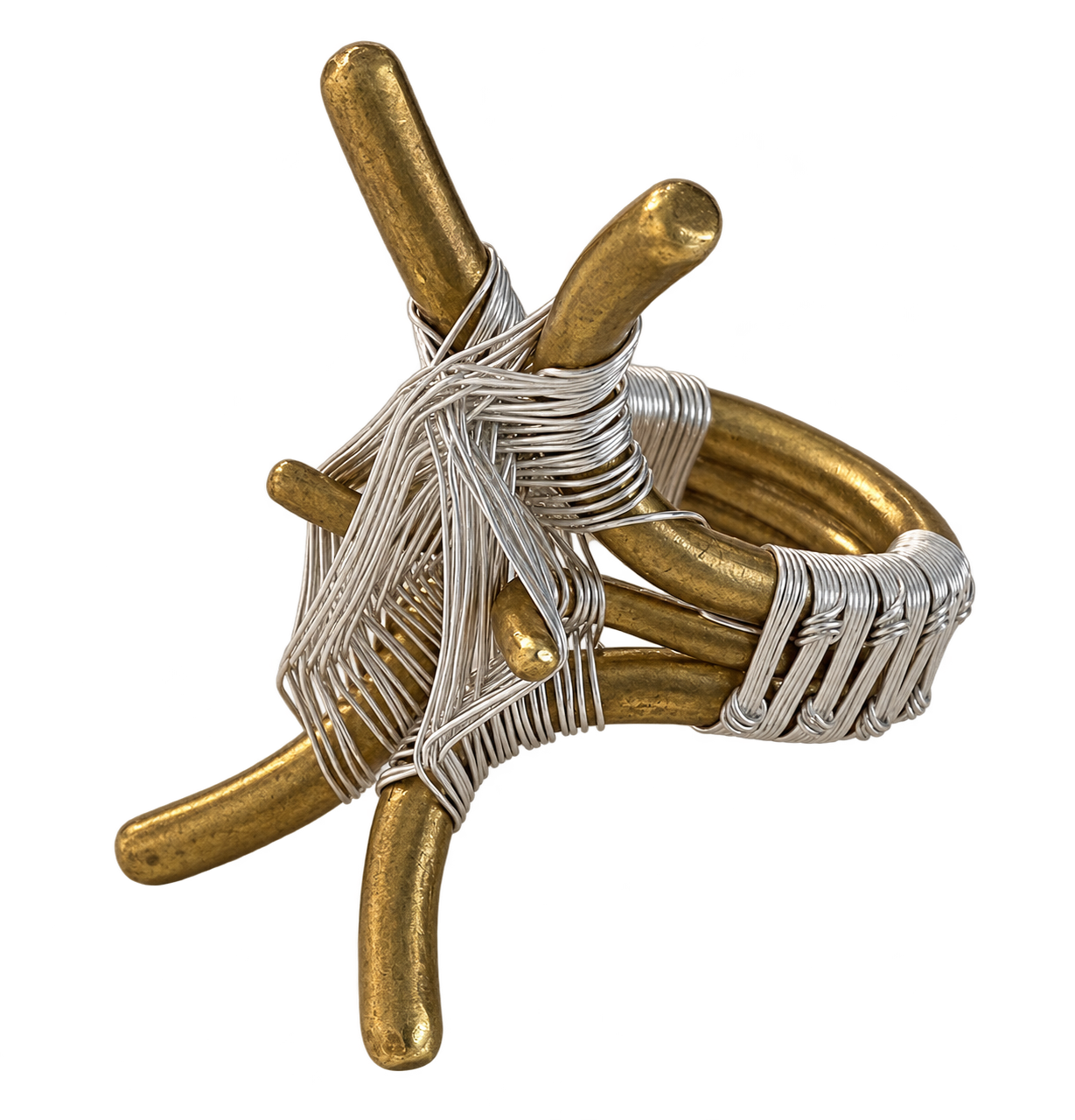
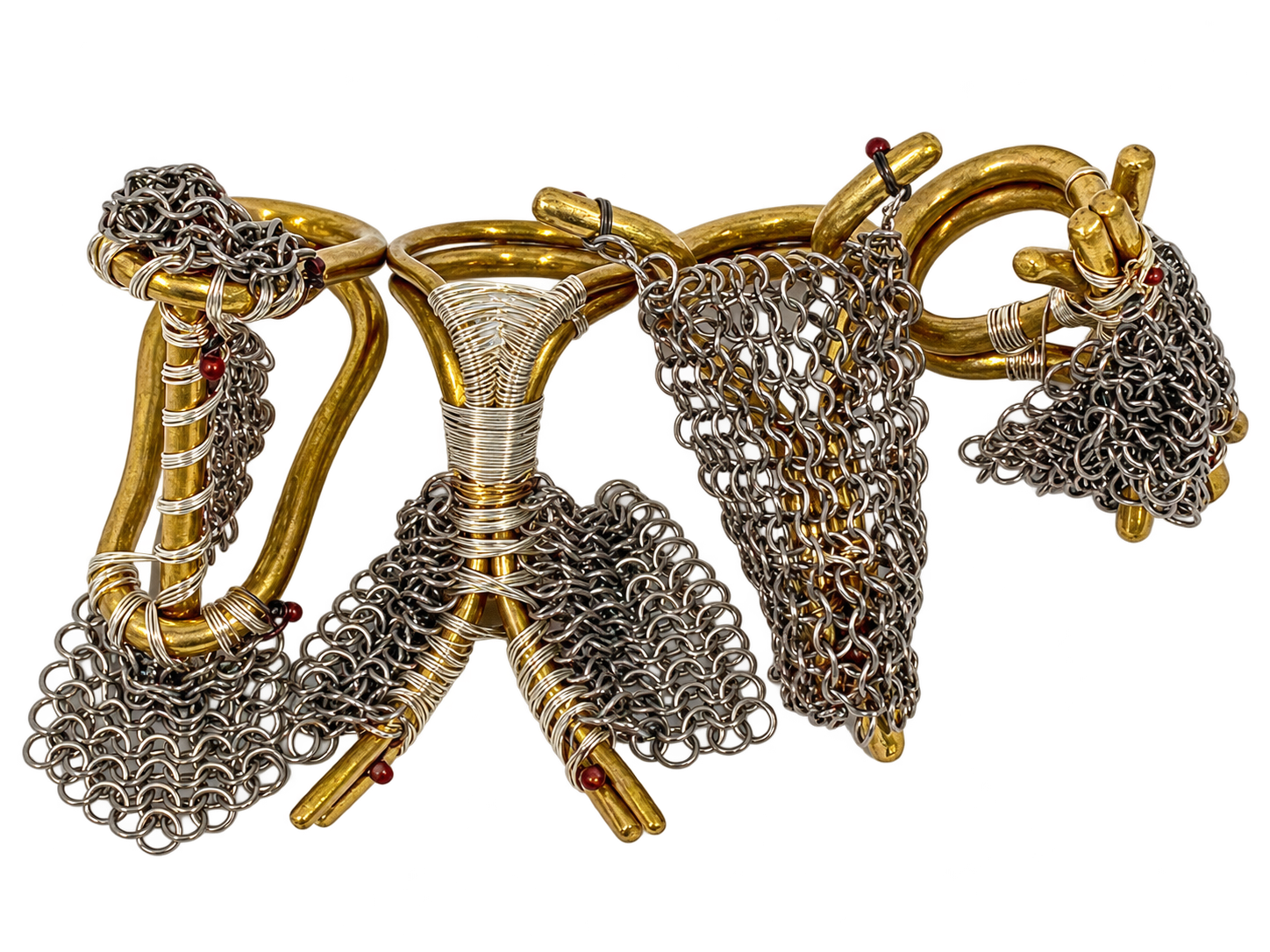
Isla Paine is a jewellery artist whose work ranges between jewellery, sculpture and movement. Working primarily with metal, she makes wearable pieces shaped by sound, rhythm and the body. Her projects range from Material Sound, where sound vibrations are etched into steel, to The Plume of a Brave Women, a necklace inspired by the women who shaped Manchester’s music scene.
How did music first become part of your work?
Music has always been close to me. I grew up around it, and my brother, Jethro, is a ballet dancer. I think I’m still looking for the childlike wonder I felt watching someone’s passion come through music and movement. As I’ve got older, music has also made me think about my own identity and the communities that form around it. I wanted to find a way to hold on to some of that feeling in an object, rather than leaving it only in the act of listening.
What made you choose Metal?
I love working with metal in general. I love its natural juxtaposition when it comes to wearable art. An aggressive material that can be softened by design. Metals ability to completely transform entrances me. I love the way it rusts and adapts to the world around it, tarnishing and changing through its life. The emotion of music is always at the fore front of my making process. Though my work has begun to take on a more abstract approach I would love to delve back into capturing a more literal instance of sound and how metals natural materiality can be a doorway for this. Allowing the metal and sound to work together.
What were you trying to do with Material Sound, and how did the sound become part of the finished piece?
I wanted sound to have a direct role in making the piece, rather than simply inspiring it. The sound and the dance were never meant to become one thing; they were meant to work alongside each other.
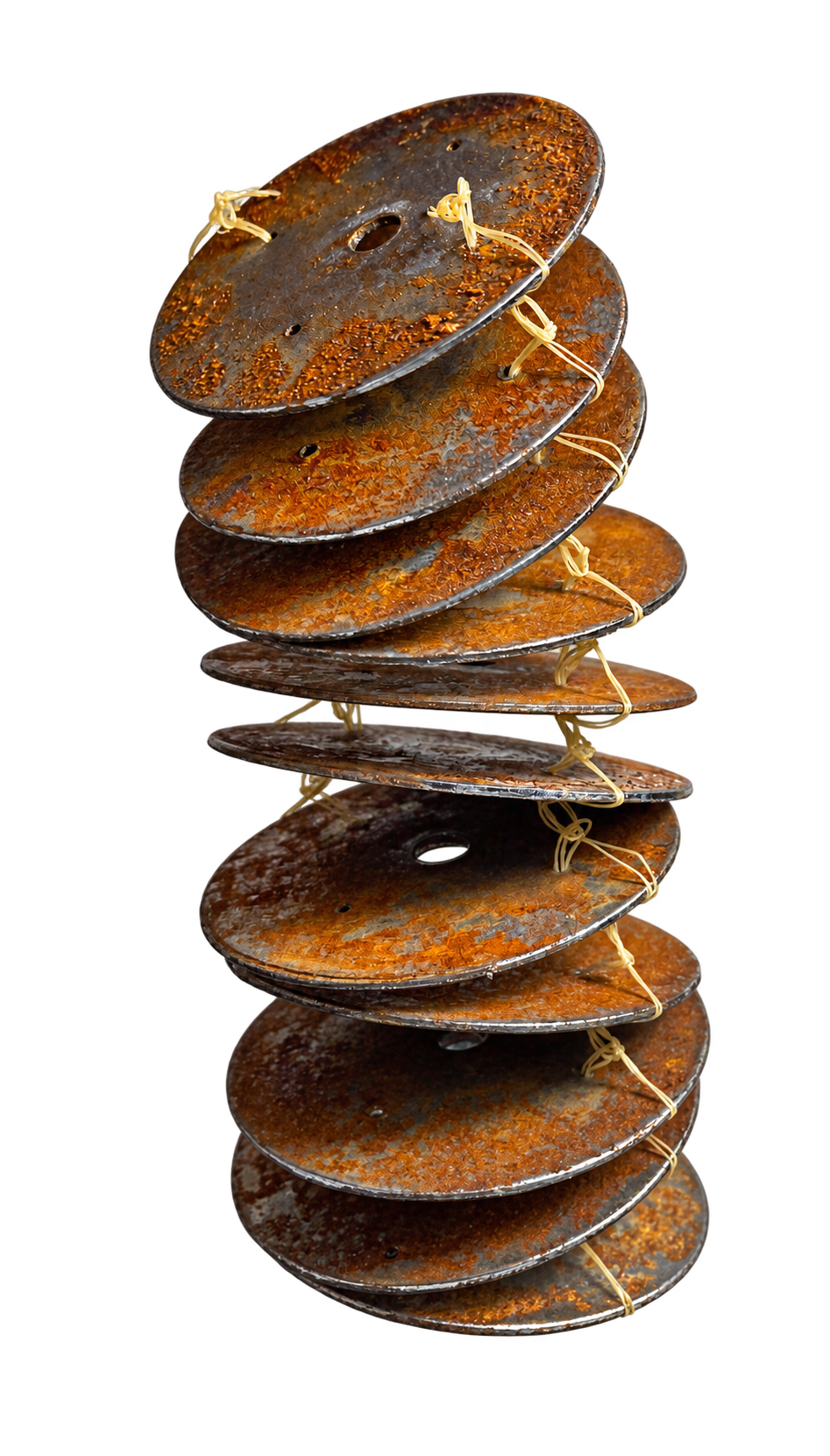
Using Chladni plates, a technique first discovered by Ernst Chladni in 1787, I captured the patterns formed by the resonant frequencies of steel plates and translated them onto the metal. I worked through different shapes until I found one that felt soft and organic. The individual plates were then water-jet cut and hand-finished.
During the etching process, I used jewellery wax to protect the sound-wave patterns. This left the waves as clean steel, while the surrounding negative space was etched and allowed to rust. Once the pieces had patinated, I removed the wax and sealed them to prevent further rusting. The result was an inverse of the expected pattern: the sound waves remained clean, while the space around them carried the colour and texture of rust.
That process allowed sound to become the artist, while I became the link between it and the material. The rhythm and sweeping forms of dance helped shape the sculpture.
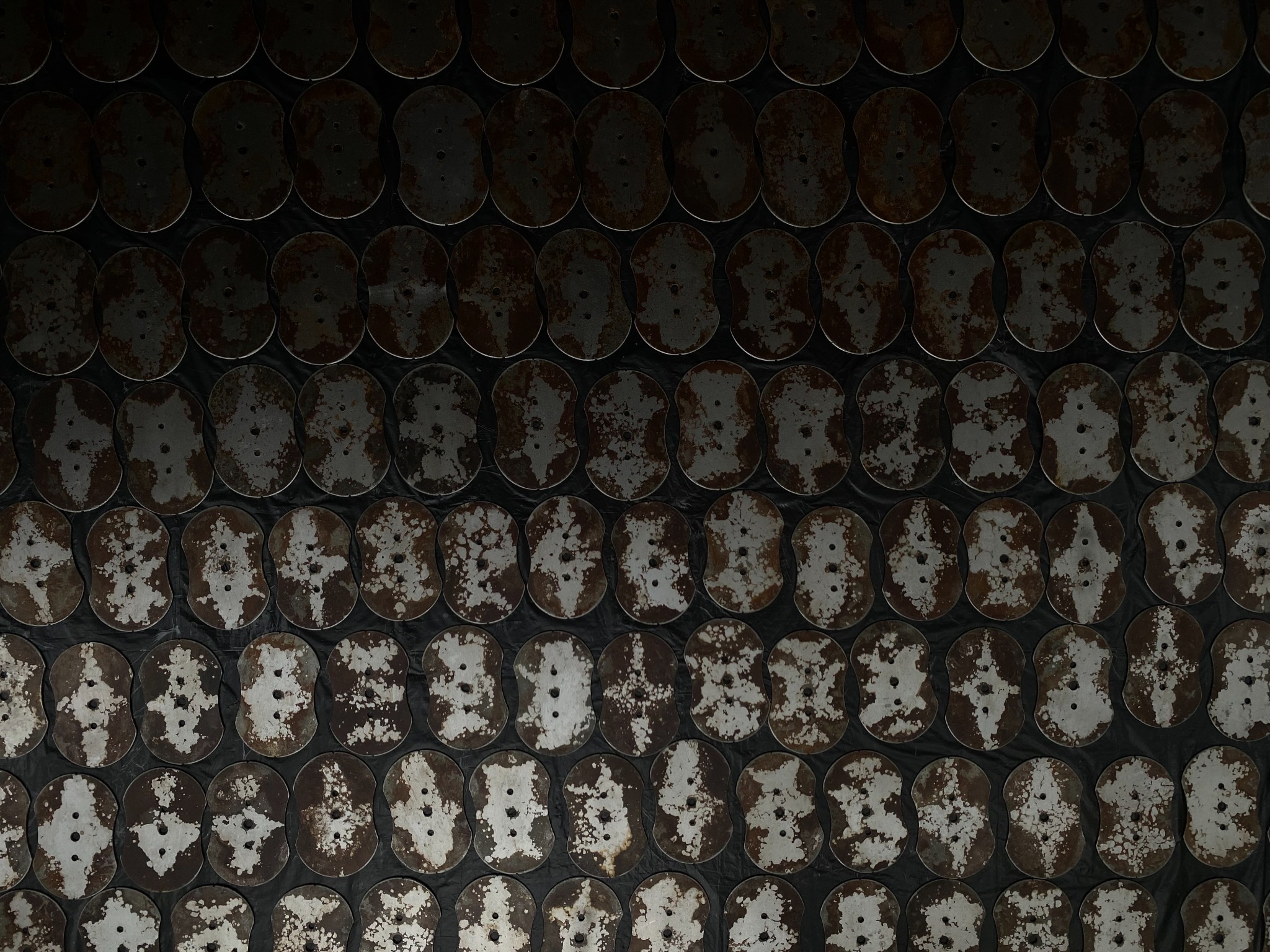
Image courtesy of Isla Paine.View source image
What does the making process look like for you?
I rarely listen to music while I work because I find it too distracting. Working away from it gives me space to think about what listening has made me feel, and how I might hold on to that. A piece begins with its first form. My larger works can become quite rhythmic because I make the same piece repeatedly. Once all the parts are crocheted together, they start to feel like an orchestra, choreographing their own movement. Smaller works usually come to an end when I feel that sense of wonder has been reached.
How did The Plume of a Brave Women come together?
It began with Manchester’s history of feminism. I started looking at the women who shaped the city’s music scene. Denise Johnson, who gold-plated records and changed the world of dance music, was one of the people who inspired me. I wanted to capture something of her voice and presence in a necklace that held both power and softness. Music became part of the pulse of the piece. The collection was exhibited during the inaugural Manchester Jewellery Week and is also a part of ACJ’s City of Suffragettes exhibition.
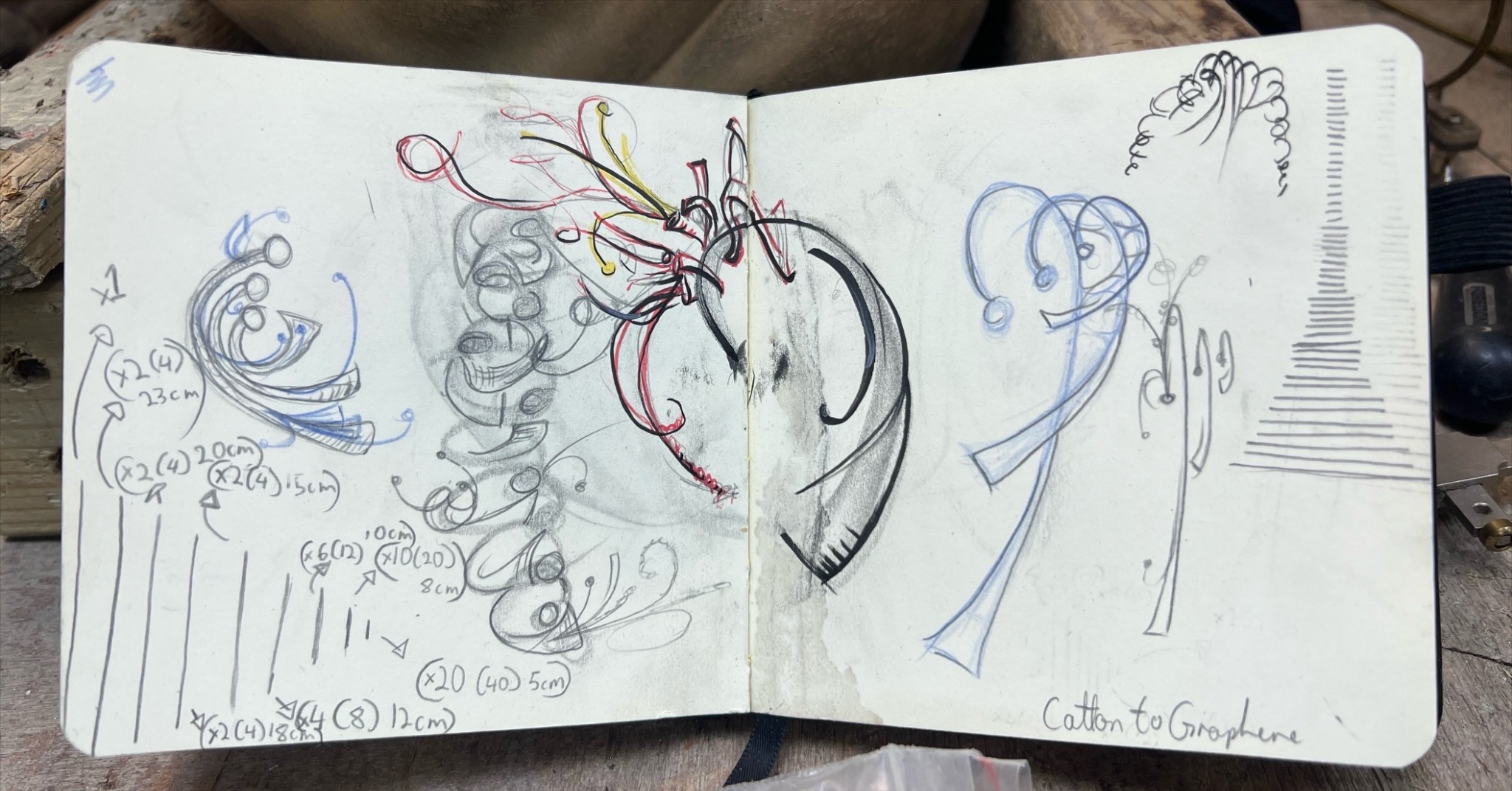
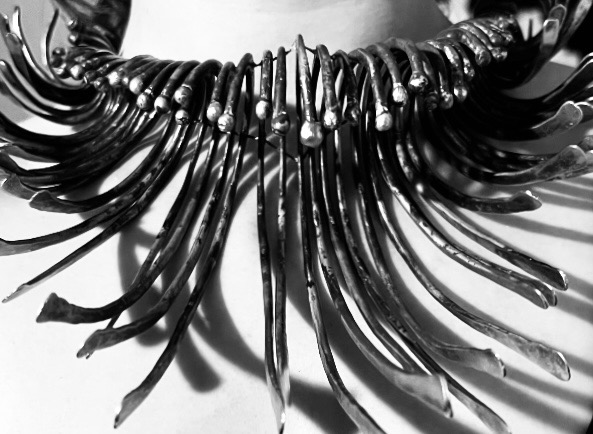
Image courtesy of Isla Paine.Image 1 · Image 2
What does the wearer bring to the work?
The wearer introduces natural movement. I want the piece to have a presence even when it is not being worn, but it takes on another life once someone interacts with it. It can begin to make sound, while new lines and shapes move through the piece. The wearer and the object start to influence each other. It becomes a playful dance between the person and the work. A kind of duet that changes both. I’m interested in work that can only be experienced fully in the moment it is happening. The wearer changes the work, and the work changes the wearer.
What are you trying to explore next through this work?
I don’t feel that I’ve reached what I want to do with music and sound yet. It’s an ongoing project, and it will continue to change. It has never been about recreating one particular song. I’m interested in the power of sound in all its forms and what happens when it moves beyond the stillness of an object. I’d like to work more closely with musicians and dancers, and continue exploring Labanotation, the language of movement. A song that has stayed with me recently is “Don’t Fight It, Feel It” by Primal Scream. I grew up in the Balkans and have a French and Italian grandmother, so I’ve always been surrounded by very different kinds of music. I enjoy sharing music with people and experiencing it together.