
Whistling two notes at once : Guerin Barry
One melody. Two ways to whistle.
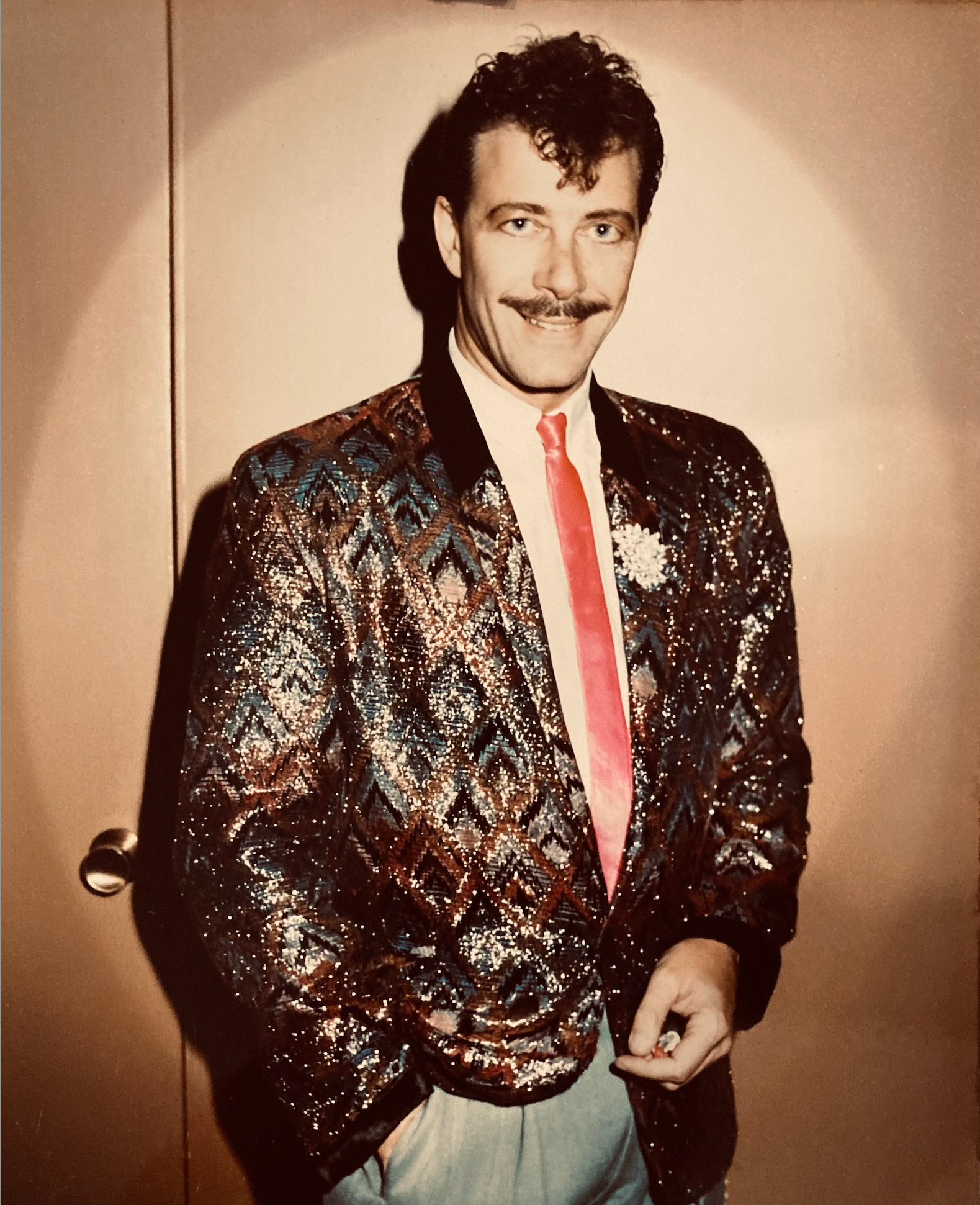
Guerin Barry studied architecture, edited film, acted, narrated audiobooks, sang bass as Tito Mambo in Sha Na Na and, somewhere in the middle of it all, became a professional whistler. The Los Angeles musicians’ union called him an Artistic Whistler. Studios called when they needed anything from fifteen seconds of happiness to something “deep and foreboding”. His whistle has appeared in films, television shows, documentaries, pop records, commercials and talking toys.
Now retired, Barry speaks with Listen Closer about growing up in New York, learning to whistle two notes at once and the strange business of turning an everyday sound into a career.
Listen Closer in conversation with Guerin Barry.
What is your first memory of whistling?
My father, Lorenzo, whistled idly, and it seemed to relieve his stress. I grew up in a fifth-floor apartment in New York City, and whenever he wanted my brother and me to come home, he would whistle from the window as if he were hailing a cab. That was the first time I heard whistling used as communication. Much later, hearing it on records, I realised it was also an instrument.
In the 1950s, I listened to rock ’n’ roll on AM radio. At night, because there was no solar interference, I could occasionally pick up WWVA from Wheeling, West Virginia, and hear country music from far beyond New York. I also listened to broadcasts of the Grand Ole Opry. When I heard fiddle players double-stopping—playing two notes at once—I would try to whisper both notes. After a while, I realised I could voice them both. I had a good ear for harmony, so the two notes sounded… harmonious. That led to a great deal of experimenting with ’50s music and jazz.
How did you find out you could whistle two notes at once?
It came from trying to imitate those fiddle players. When I whistle polyphonically, I hear and consciously choose both notes. I imagine it’s the same process a pianist uses when playing several notes with one hand. You know what you’re going for, and you do it.
How I physically produce them, however, I really don’t know. I suspect my tongue forms an arc inside my mouth, creating two chambers that change in size depending on its position—but that’s just a guess. People have often asked me how it works, but it isn’t something I’ve ever been able to teach.
Were you always interested in what the voice could do?
As a teenager, I very much wanted to be a bass singer in the doo-wop music of the time. My voice, however, wasn’t deep enough yet. I’ve always joked that enough cigarettes and whiskey will get anyone there, but it really happened naturally—and with use.
Speaking and singing in different registers is something I later trained myself to do. I’ve narrated audiobooks in which I voice every character with a different accent, personality and way of speaking. You decide whether a voice will be high or low, strong or weak, whether it will come from the back of the throat or the front, whether the lips will be pursed or one lip will pull down.
Growing up in New York, I was surrounded by different accents, and I was always trying to reproduce them. Most of my audiobook assignments were international intrigue or murder mysteries, filled with characters from different parts of the world. There are so many small things that can create a completely different sound.
One instrument can have many registers; a guitar or saxophone has low notes and high notes. I think we’re all capable of many things. It’s simply a matter of how much we practise the instrument, so those things are available when we need them.
I also studied architecture and later worked as a film editor. I don’t consciously bring the order of architecture or editing into my whistling, but I’m sure those experiences inform it somehow. As actors and musicians, we bring everything we’ve already experienced into every new experience.
How did you actually become a professional whistler?
Well, first I had to become a union whistler.
I was playing bass and singing with a friend in bars—to support myself, as young actors often do—when a fellow approached us during a break and introduced himself as a shop steward from the musicians’ union.
“Well, this bar certainly isn’t a union house,” I said.
“Correct,” he replied. “But you’re playing with a union musician, and he isn’t allowed to play with non-union musicians. Otherwise, he’ll be fined.”
So I decided to join. I thought it would be rather wonderful to become a professional union musician in Los Angeles’s famed Local 47. The following day, I went to the union hall, where a woman at the desk informed me that auditions would be held the next Monday. I explained that I had been told I needed to join, but she said the audition was mandatory.
The thought of dragging my bass and amplifier down there wasn’t particularly appealing, so when she asked which instrument I played, I said, “I’m a whistler.”
The following Monday, sure enough, I went down to the union hall. I whistled some scales and a few tunes, passed muster and was welcomed into the union under the category of Artistic Whistler.
The first professional job came just as accidentally. I had printed some humorous business cards for my acting career which read: Guerin Barry, Actor/Whistler. I handed them out, as one does. They don’t do you any good sitting in your pocket.
A composer who made music for films and commercials had written a piece with a whistling lead, which he planned to produce using a sampler and synthesiser. When he played it for a friend, it sounded so terrible that he said, “I’m going to have to call the musicians union for a whistler.”
At that point, his friend reached into his pocket and said, “Wait, I’ve got this guy’s card.”
The rest is history. I went to the studio, listened to the track he wanted reproduced with a real whistle and did it.
What do people ask for when they hire a whistler?
It’s different every time. I’ve whistled for composers working on television, documentaries, pop records, commercials, production music and even talking toys. Sometimes I’m given a melody to follow. Other times, the entire direction is, “I need fifteen seconds. Give me something up-tempo and happy.” Or, “Give me something deep and foreboding.”
One composer gave titles to all her music. She had written a piece called “Aunt Bee’s Boots”, which had a Mayberry R.F.D. kind of feeling to it, so I added my own whistled track—my own composition. We recorded it several times until she was happy with one. A few months later, I was driving through Los Angeles when a commercial came on the car radio. Something in it sounded familiar. Sure enough, someone had bought “Aunt Bee’s Boots”, and there was my whistle.
I’ve also worked on documentary soundtracks. For Rory Kennedy’s The Fence, I was asked to add whistling to a Mexican-style tune. For Liz Lachman’s Forked, I recreated the whistling from the 1938 song “Big Noise from Winnetka”.
Breathing and timing are always important, so I do breathing and whistling exercises before a recording session to make sure I have the tools I’ll need. When I whistle live with a jazz guitarist, though, it’s the same as any musician jamming with another musician. It’s a conversation.
Have you ever got a whistling job wrong?
I once lost an audition for the film Reindeer Games. They needed the sound of a prisoner whistling as he walked across a snowy prison yard, and I lost the job because I whistled too artistically. My fault for not realising what was needed.
Whistling for L.A. Law was a different kind of lesson. The show was produced by 20th Century Fox, and they wanted me to whistle “Laura”, the theme from the 1944 film they owned, so the royalties would stay with them. Sometimes the choice has less to do with the whistle and more to do with who owns the tune.
Do people ever get tired of hearing you whistle?
Oh, yes.
For several years, I toured as Tito Mambo with Sha Na Na, sometimes performing 250 nights a year. I really do whistle all the time, and if you’re not me, I can understand how that might become pretty annoying.
At one point, the group made some rules: there would be no whistling at the airport, in the limousine, at the hotel’s front desk, in the dressing rooms or backstage. I obeyed, although several of our ’50s songs included whistling. I was still required to whistle in “Rockin’ Robin” and “The Stroll”.
Some people are more sensitive to high frequencies than others. My wife, Toni, sometimes asks me to pull the volume back when we’re in the car. I had a cinematographer friend who, every time I whistled, would squint his eyes, hold his breath and clench his teeth. To him, it was like fingernails on a blackboard.
Has whistling ever helped you communicate when words couldn’t?
I’ve whistled around the world and once spent time with half a dozen Buddhist monks from Tibet. They spoke no English, and needless to say, I don’t speak their language either. They were very curious about my whistling, though, and seemed to enjoy it. We understood one another well enough.
Whistling means very different things in different places. Superstitious actors never whistle in a theatre. In some Hmong traditions, whistling at night is believed to summon spirits. Then there are places where it is used as an actual language. In Kuşköy, Turkey, and on La Gomera in the Canary Islands, people communicate from hilltop to hilltop through whistles, using complete vocabularies.
Musical whistling has a history of its own too. In the 1920s and ’30s, Fred Lowery was a well-known whistler. Muzzy Marcellino and Toots Thielemans were also widely recorded. Songs such as “Heartaches” had whistling breaks, while “The High and the Mighty” placed a whistle right at the front of the music.
I also consider whistling one of the reasons I’ve remained healthy into my eighties. All my life, I’ve whistled idly throughout the day. It feels a little like tantric breathing: a deep inhalation followed by a slow, measured exhalation. I believe it has helped keep my lungs healthy through an embarrassing number of years spent smoking as a young man.