
How the world laughs
Explore laughter through a sound atlas.
In José de Alencar’s 1872 novel Til, a character laughs “Quiá!… quiá!… quiá!” Versions of that laugh appeared across Brazilian fiction and newspapers, then in the quá quá quá of translated Disney comics. For Donald Duck, the spelling suggested both laughter and quacking. In Brazilian messages today, kkkkk represents a similar ka-ka-ka sound.
We pick up these spellings from other people and the things we read, usually without giving them much thought. English hahaha is immediately recognisable to someone accustomed to using it. The same person might not recognise Thai 555 or Japanese wwwww as laughter at all.
Often, the explanation comes down to pronunciation. English hahaha and Spanish jajaja use different letters to approximate a similar sound: the Spanish j can have a breathy or throaty pronunciation, depending on the accent. Mandarin 哈哈哈 follows the same repeating rhythm, with 哈 pronounced hā. Thai 555 works on this principle too. The word for five, ห้า, is pronounced roughly haa, so reading the digits individually produces ha-ha-ha.
People also shorten these expressions and find new uses for them. Japanese users reduced warai, meaning laughter, to w, then repeated it for emphasis. A row of letters such as wwwww resembled blades of grass. That resemblance led to 草, pronounced kusa and meaning “grass,” becoming another way to respond to something funny.
Knowing what a written laugh means still leaves room to interpret its tone. There is a difference between receiving ha, haha and hahahahaha, even though each uses the same two letters. Korean ㅋㅋㅋ, formed from the consonants in written laughs such as 크크 (keukeu), allows similar adjustments. A single ㅋ can suggest mockery; a longer string can convey greater amusement. How it comes across depends on who sends it and what came before.
Sometimes, the laugh is there to make the conversation feel friendlier. Linguist Gretchen McCulloch has described how lol can reassure someone of good intentions or ease an awkward exchange, even when no one is laughing aloud. As it becomes a routine response, it can feel insufficient when something is especially funny. People may then describe their reaction more explicitly, telling someone that they have just spat coffee over the keyboard.
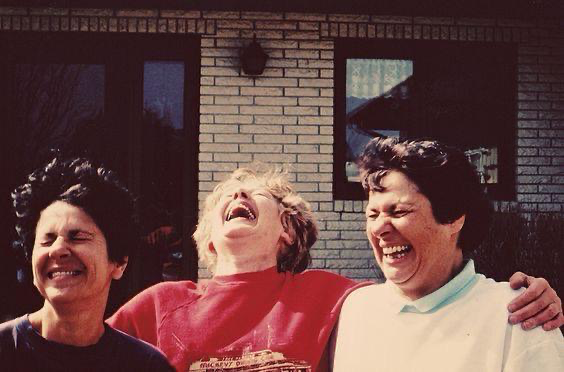
Real laughter rarely sounds as neat as these written versions suggest. It can be breathy and uneven, interrupted by a snort or almost entirely silent. Even the familiar hahaha captures very little of what we actually hear when someone laughs.
Writing laughter turns out to say quite a lot about language: not because people around the world laugh differently, but because we have found so many different ways to write down the same very human sound.